


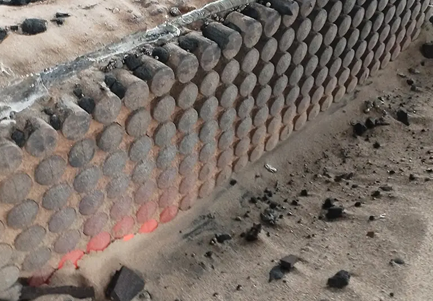
Industrial milling operations rely heavily on a fundamental component to process materials. We recognize this primary media as essential for both ball mills and planetary mills. They crush, grind, and homogenize raw feed through continuous physical impact and friction. You will find them at the heart of mineral processing, cement manufacturing, and pharmaceutical production.
You might think this operational concept is simple. However, specifying the wrong media creates serious industrial problems. It dramatically increases daily energy consumption. It also accelerates internal equipment wear and risks contaminating the final product. Poorly selected media can halt an entire production line.
We designed this guide to provide an evidence-based framework for facility managers and engineers. You will learn how to evaluate material types, exact sizing rules, and strict quality standards. This knowledge helps you optimize your mill performance. You can proactively reduce operational waste and extend the lifespan of your heavy equipment.
Mechanism: Grinding relies on two distinct physical forces—impact (direct collision) and attrition (rubbing/friction).
Material Matrix: Forged steel excels in high-impact scenarios; high-chrome cast iron dominates in abrasive wear resistance; ceramics (alumina/zirconia) are mandatory for contamination-free or spark-free environments.
Operational Limits: Mill performance is capped by "critical speed" physics; exceeding optimal RPM causes balls to pin against the cylinder wall, halting the grinding process.
Quality Variance: Premium grinding media can exhibit wear rates as low as 0.01–0.05% per ton, whereas poorly manufactured alternatives can degrade up to 10x faster due to internal casting defects or suboptimal quenching.
Milling machines operate on precise kinetic principles. The continuous rotation of a cylindrical drum dictates the primary movement. As the drum turns, it lifts the media up the internal wall. Gravity eventually overcomes this upward momentum. The media then drops back down in a cascaded motion. Planetary mills operate differently. They use Coriolis forces generated by opposing rotational movements. This generates high dynamic energy for specialized lab grinding.
We must differentiate the two physical forces driving this process. The first force is impact. Impact causes coarse reduction. This happens when the falling media drops directly onto the raw material. The heavy collision shatters larger particles instantly. The second force is attrition. Attrition handles fine grinding. It occurs when media rolls against each other and rubs against the mill lining. This continuous friction grinds the shattered particles into fine powder.
You must understand the "critical speed" bottleneck. Many operators assume more RPM equals higher yield. Physics proves this wrong. Operating near or above the mill's critical speed utilizes too much centrifugal force. This force pins the media directly against the cylinder wall. They stop falling completely. When they stop falling, the grinding process halts. Operators must maintain RPMs well below this critical threshold to generate kinetic energy.
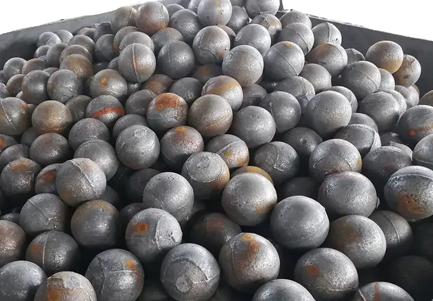
Material selection defines the success of your milling operation. You must match the media composition to your specific industrial environment. Evaluating the differences between forged, cast, and ceramic options prevents premature failure.
Manufacturers produce forged steel media using hot-rolling or mechanical presses. They typically finish the process with rapid water quenching. This rapid cooling increases surface hardness. Forged steel provides immense structural toughness.
We recommend forged steel for heavy-duty, high-impact coarse grinding. You will see it used extensively for processing raw ore in the mining industry. The intense collisions require extreme fracture resistance. However, you must monitor a specific risk factor. Forged media is prone to higher wear rates in highly abrasive environments. Its lower alloy complexity makes it vulnerable to rapid surface degradation over time.
Cast iron and steel undergo a highly engineered manufacturing process. Producers alloy the base metal with chromium, molybdenum, and nickel. Chromium content can range from 1% up to 28%. The media then undergoes high-temperature quenching and careful self-tempering.
This customized chemistry makes cast media ideal for continuous fine grinding. They thrive in highly abrasive settings like cement production. Premium high-chrome cast media proves its value through data. They maintain an impressive breakage rate of less than 0.5%. They also offer up to four times the lifespan of standard forged options in these abrasive applications. High-chrome alloys resist spalling and maintain their spherical shape significantly longer.
Engineers design ceramic media from sintered corundum, alumina, or zirconium oxide. These non-metallic options serve highly regulated industries. They provide superior chemical inertness and exceptionally high density.
You will find ceramics in pharmaceuticals, food processing, and volatile chemical processing. They solve two critical risk factors. First, they eliminate sparks caused by steel-on-steel contact. This is mandatory for preventing combustible powder explosions. Second, they avoid iron contamination entirely. Sensitive slurries and high-purity chemical mixtures require this pristine processing environment. Without ceramics, metallic flaking ruins the final product.
Material Type | Primary Manufacturing | Best Application | Core Risk Factor |
|---|---|---|---|
Forged Steel | Hot-rolling, mechanical presses, water-quenched | Raw ore, high-impact coarse grinding | Higher wear in highly abrasive environments |
Cast Iron / Steel | Alloyed (Cr, Mo, Ni), high-temp quenched | Cement, continuous fine grinding | Higher upfront engineering cost |
Ceramic (Alumina/Zirconia) | Sintered corundum, zirconium oxide | Pharma, food, explosive environments | Prone to shattering under extreme high impact |
Selecting the right grinding ball requires strict adherence to standardized parameters. You cannot guess the dimensions or chemistry. We utilize a proven 4-pillar framework to guarantee operational compatibility.
Size (Diameter): The rule of thumb is strict. Your media must be significantly larger than the coarsest feed material. However, it must remain small enough to maximize surface area for final powdering. Larger dimensions crush heavy materials effectively. Smaller dimensions refine the particles through extensive attrition.
Density (Specific Gravity): You must evaluate the specific gravity of the media. The chosen material must be fundamentally denser than the feed material. If it lacks sufficient density, it will float on top of wet-milling slurries. Floating completely neutralizes the impact force and wastes operational energy.
Hardness (Volumetric Hardness): Always assess the HRC or HB hardness ratings. The media must be significantly harder than the sample material. However, buyers face a delicate balancing act. You must balance the media hardness against the hardness of your internal mill liner. If the media is too hard, it causes catastrophic internal liner wear.
Composition & Inertness: Evaluate chemical compatibility carefully. You want to avoid reactive degradation or unwanted cross-contamination. For example, processing acidic slurries with low-alloy steel causes rapid oxidation. This ruins the batch and degrades the media rapidly. You must select alloys or ceramics that remain entirely inert during the chemical process.
Purchasing high-quality media only solves half the equation. You must implement strict load management protocols. Proper sizing ratios and loading rules dictate how efficiently your equipment runs.
Follow the 2/3 Fill Rule: Operational best practices dictate strict volume limits. Your grinding media and sample material combined should never exceed two-thirds of the total vessel volume. You must leave the remaining one-third completely empty. This void provides the critical kinetic drop space. Without this space, the cascading impact effect cannot occur.
Execute Strategic Mixing (Industrial Scale): Large operations benefit from blending different media sizes. You might use a tiered ratio of large and small media in the same drum. Sometimes engineers occasionally mix ceramics with steel. This strategic mixing optimizes the energy draw and increases overall yield. It actively reduces over-grinding by balancing impact and attrition evenly across the load.
Enforce Strict Segregation (Laboratory Scale): You must treat lab-grade planetary mills differently. Contrast industrial mixing with lab protocols. Mixing different media sizes in the same jar is strictly prohibited in planetary mills. Mixed sizes generate erratic kinetic forces at high RPMs. These uncontrolled forces will quickly damage the sensitive equipment and compromise your highly controlled experimental yield.
You must scrutinize your manufacturing partners. The market contains vast quality differences. A properly engineered grinding ball performs vastly better than a poorly cast alternative. Knowing what to look for prevents costly production shutdowns.
Production methods matter greatly. You should contrast the efficiency of hot-rolling versus stamping. Hot-rolling offers rapid cooling and creates higher structural integrity throughout the metal. Stamping relies on older mechanical processes. It historically yields a lower output and generates 10% to 20% higher metal waste. Understanding these factory methods helps you identify premium vendors from outdated ones.
Surface and structural integrity demand visual and ultrasonic inspection. We guide buyers to actively look out for lower-tier product defects. You should reject shipments showing shrinkage cavities or internal pores. Watch out for cold shuts and "elephant skin" surface defects. These micro-flaws compromise the structural matrix. They inevitably lead to premature spalling and unacceptably high breakage rates inside the mill.
Standardized tolerances separate professional suppliers from amateurs. Emphasize the importance of nominal diameter error ranges during procurement. For example, a batch of 15-25mm media should hold a strict tolerance of ±1.0mm. Tight error ranges ensure predictable volumetric loading. They also guarantee consistent attrition rates across thousands of hours of continuous operation.
Selecting media for your milling operation is an engineering specification, not a simple commodity purchase. You must match the physical mechanics of your equipment with precise material chemistry. Ignoring this synergy leads to rapid wear and operational inefficiency.
We see that higher upfront costs for precision-alloyed cast options or high-density ceramics pay off quickly. They frequently offset massive reductions in energy consumption. They also protect your expensive mill liners and stretch the timeline between mandatory media replacement cycles.
We encourage facility managers to take immediate action. Conduct a comprehensive material wear audit on your current production line. You should then request a sample trial of alternative alloy or ceramic compositions. Testing a small batch allows you to measure efficiency gains before executing your next bulk procurement.
A: We strongly advise against mixing forged and cast media. They possess vastly different hardness levels and mixed wear rates. The harder cast media will aggressively degrade the softer forged media. This rapid wear generates excess metal flakes, alters your load dynamics, and greatly decreases overall milling efficiency.
A: You calculate size by analyzing the maximum feed particle size and your desired output micron size. The media must be heavy enough to crush the largest incoming particles upon impact. Simultaneously, you must include smaller media to maximize surface area contact, which achieves the fine output micron size through attrition.
A: Premature fracturing usually stems from severe manufacturing defects or operational errors. Poor heat treatment and overly aggressive water quenching leave internal stresses inside the metal. Additionally, operating your mill at mismatched RPMs causes excessive direct impacts against the bare steel liner, which shatters even high-quality media.
A: You should upgrade to ceramic media when your process triggers specific safety or purity requirements. These include strict iron contamination limits in pharmaceuticals, explosive dust environments where steel sparks pose severe danger, or strict hygienic compliance protocols in the food processing industry.


