

Views: 0 Author: Site Editor Publish Time: 2025-10-06 Origin: Site


Autoclaved Aerated Concrete (AAC) has gained immense popularity in the construction industry due to its lightweight nature, thermal insulation, and eco-friendly properties. Producing high-quality AAC requires precise control over the grinding of sand and other raw materials, making the choice of grinding media a critical factor. Among the various components used in AAC plants, grinding balls—particularly high hardness steel balls—play a pivotal role in optimizing the milling process.
In AAC production, raw materials like quartz sand, cement, lime, and gypsum must be ground to a fine, uniform particle size before mixing and autoclaving. The grinding media directly influences the efficiency of this process. Using appropriate grinding balls ensures the material achieves the desired fineness, which in turn affects the quality, strength, and uniformity of the final AAC blocks.
High hardness steel balls have emerged as the preferred choice for AAC plants due to their superior wear resistance, toughness, and long service life. Unlike standard grinding balls, these high-performance media can withstand the rigorous conditions inside industrial mills, ensuring consistent milling efficiency, reduced downtime, and optimal energy utilization.
High hardness steel balls are specially designed grinding media made from steel alloys with elevated chromium or carbon content. This composition enhances hardness, density, and wear resistance, enabling the balls to withstand repeated impact and abrasive wear during intensive grinding operations.
Typically, these steel balls are produced through either casting or forging methods. Casting involves pouring molten steel into molds to form uniform balls, offering good hardness and cost-effectiveness. Forging, on the other hand, subjects heated steel billets to high pressure, producing balls with superior toughness, wear resistance, and durability, making them ideal for heavy-duty AAC plant milling.
High hardness steel balls offer a combination of properties that make them indispensable in AAC milling:
Wear Resistance: These balls maintain their shape and size over extended periods, reducing the need for frequent replacement. This property is particularly critical for grinding quartz sand, which is highly abrasive.
Toughness: Forged high hardness steel balls can resist cracking or deformation, even under high-impact conditions. This ensures stable milling performance throughout the ball’s lifespan.
Longevity: Durable grinding media not only reduce operational interruptions but also lower overall milling costs by minimizing media consumption.
Standard steel balls are suitable for general milling operations but fall short in highly abrasive AAC applications. High hardness steel balls outperform standard media by offering:
Higher resistance to surface wear
Reduced breakage or chipping under stress
Consistent grinding performance across long operational cycles
Incorporating high hardness steel balls in AAC plants ensures the grinding process is both efficient and cost-effective, producing uniformly ground sand for superior AAC block quality.
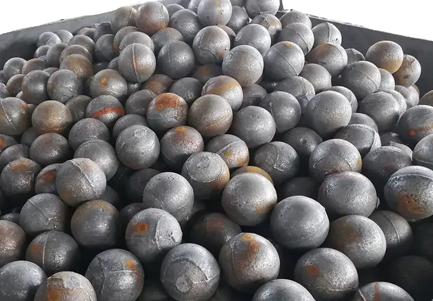
Efficient grinding is a cornerstone of AAC (Autoclaved Aerated Concrete) production. High hardness steel balls play a critical role in ensuring consistent particle size, improving raw material uniformity, and enhancing overall milling performance. Proper grinding media selection not only optimizes process efficiency but also ensures superior product quality, reduced operational costs, and sustainable plant productivity.
Sand is the primary raw material in AAC production and must be finely and uniformly ground to achieve optimal slurry quality and final block strength. High hardness steel balls significantly improve sand grinding through:
Consistent Particle Size Distribution: The superior wear resistance of high hardness steel balls ensures uniform grinding, avoiding coarse or uneven particles that can compromise AAC block quality.
Reduction of Over-Grinding and Waste: Properly sized grinding media prevents excessive crushing, reducing fines generation and minimizing material loss.
Enhanced Mill Throughput and Efficiency: High-quality steel balls maintain optimal grinding performance, allowing mills to operate at full capacity without sacrificing sand quality.
By selecting the correct diameter, hardness, and type of grinding ball, AAC plants can achieve a balance between high productivity and excellent sand quality, laying a strong foundation for downstream processing.
In addition to sand, AAC production involves grinding a blend of raw materials, such as lime, cement, and gypsum. High hardness steel balls provide effective grinding across all these components, leading to:
Even Particle Distribution: Ensures uniform mixing of raw materials in the AAC slurry, preventing inconsistencies in chemical composition.
Improved Autoclaving Efficiency: Uniform particle size promotes faster and more consistent curing, enhancing the strength and dimensional stability of finished AAC blocks.
Consistent Mechanical Properties: Properly ground materials result in blocks with uniform density, compressive strength, and durability.
The use of premium grinding media directly impacts the quality of the final product while optimizing raw material utilization, reducing waste, and enhancing overall plant efficiency.
The benefits of high hardness steel balls extend beyond milling, influencing key downstream processes:
Autoclaving: Consistently ground raw materials allow for uniform heat and steam penetration during autoclaving, ensuring stronger blocks with minimal defects.
Curing and Drying: Evenly ground particles reduce drying time and prevent cracks or deformation, improving block stability and surface finish.
Waste Minimization: Optimal grinding reduces oversized particles, lowering the need for regrinding and decreasing energy consumption and operational costs.
High hardness steel balls are thus integral to maintaining process efficiency, reducing maintenance requirements, and producing AAC blocks that meet rigorous quality standards. By integrating these grinding media into milling operations, AAC plants can achieve sustainable productivity, consistent product performance, and significant cost savings over time.
High hardness steel balls enhance grinding efficiency by maintaining their shape and hardness over prolonged use. Mills experience fewer interruptions for media replacement, allowing continuous operation at peak capacity. This leads to higher throughput and ensures that production targets are consistently met.
The durability of high hardness steel balls significantly reduces wear on both the grinding media and mill liners. Fewer media replacements mean less downtime and lower labor costs, which directly contributes to cost savings in AAC plant operations.
High hardness steel balls improve energy transfer within the mill, reducing power consumption per ton of raw material processed. Their superior grinding efficiency allows plants to achieve desired fineness with fewer passes, resulting in lower electricity usage and overall operational costs.
Selecting the right hardness and diameter of grinding balls is essential for AAC milling. Factors include:
Hardness: Higher hardness provides better wear resistance, particularly for abrasive sand.
Size: Larger balls are suitable for primary coarse grinding, while smaller balls are ideal for fine grinding to achieve uniform particle size.
Other considerations when selecting high hardness steel balls for AAC plants include:
Mill type (SAG, ball mill, or vertical roller mill)
Mill capacity and operational speed
Raw material characteristics, including hardness and moisture content
Cast Steel Balls: Economical and provide consistent hardness, suitable for general milling tasks.
Forged Steel Balls: Offer higher toughness and wear resistance, ideal for abrasive materials and heavy-duty milling.
Choosing the appropriate media type ensures optimal grinding performance while minimizing maintenance and operational costs.
High hardness steel balls are critical for AAC plant operations, offering exceptional wear resistance, toughness, and grinding efficiency. Selecting the right size, hardness, and type—cast or forged—enables higher throughput, lower energy consumption, and consistent product quality. Investing in premium grinding balls is more than a technical choice; it’s a strategic decision that enhances operational efficiency, reduces costs, and ensures long-term reliability. AAC plant operators looking to optimize milling performance and achieve superior results can consult experienced suppliers like Anhui Ningguo Zhongrui Wear-resisting Material Co., Ltd. for tailored high hardness steel ball solutions designed to meet specific mill conditions and raw material requirements, ensuring sustainable productivity and improved profitability.


