

Views: 0 Author: Site Editor Publish Time: 2026-07-13 Origin: Site


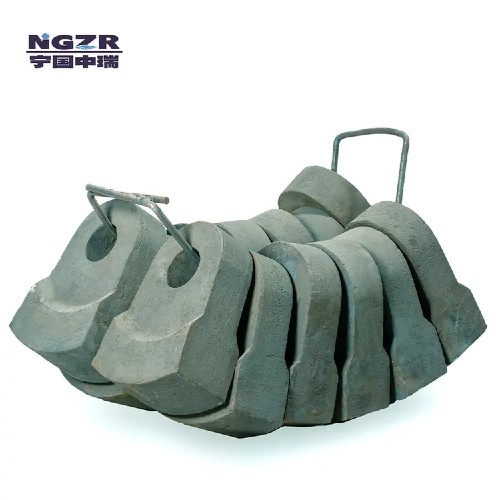
Hard steel can still fail too early. Why? It may crack before it wears out. A manganese steel liner solves this problem in heavy mills. It adds toughness, impact strength, and wear resistance. In this article, you will learn what manganese does to steel and why it matters for mill liners.
Adding manganese to steel changes how the steel behaves under force. It does not simply make steel “harder.” It helps steel become stronger, tougher, and more stable in harsh service.
In steelmaking, manganese also helps improve steel quality. It supports cleaner steel by reducing the harmful effect of sulfur and oxygen. Cleaner steel usually gives more reliable mechanical properties. This matters for cast wear parts because small internal defects can grow into cracks during heavy impact.
Manganese also improves hardenability. In simple terms, it helps steel develop useful strength through a thicker section, not only at the surface. This is important for liners, because they are not thin decorative parts. They face heavy grinding media, ore movement, vibration, and long service cycles.
The biggest value is toughness. A liner may face thousands of impacts during operation. If the steel is too brittle, it may crack even when the surface hardness looks high. Manganese helps the steel absorb impact instead of breaking quickly.
For this reason, manganese steel is often used in mining, cement, quarrying, and mineral processing wear parts. It is especially useful where impact and abrasion happen at the same time.
Work-hardening is the most important reason manganese steel is used in heavy wear parts. It means the steel surface becomes harder after repeated impact, pressure, or deformation.
This is different from steel that only leaves the factory with high hardness. A manganese steel liner can begin with a tough structure. Then, as grinding media and ore strike the surface, the outer layer becomes harder. The inside stays tough and helps resist cracking.
This balance is valuable. A very hard liner may resist abrasion, but it can crack under shock. A very tough liner may absorb impact, but it may wear too fast. Manganese steel sits between these two needs. It can take impact and develop a harder working surface.
Work-hardening needs enough impact to happen. If the working condition is too light, the surface may not harden much. In that case, the liner may not show its full advantage. This is why the same material can perform well in one mill but poorly in another.
A manganese steel liner works best when the mill creates enough pressure and repeated impact. Ball mills, SAG mills, crushers, and other severe wear systems often create these conditions. The liner is not only a passive cover. It becomes part of the grinding environment.
Several factors can limit work-hardening. These include ore hardness, feed size, grinding media size, mill speed, liner shape, alloy balance, and heat treatment. If one factor is wrong, the liner may wear unevenly or fail early.
Ball Mill Liners face a demanding job. They protect the mill shell from direct impact and friction caused by grinding media and material movement. They also help control how grinding media moves inside the mill.
A liner does not only prevent damage. Its shape can affect lifting, falling, sliding, and grinding action. This means liner material and liner profile both influence grinding performance. A good liner helps protect equipment and support stable production.
A manganese steel liner is useful in this setting because it can handle repeated blows. As balls and ore hit the liner, the surface can harden during use. At the same time, the liner body keeps enough toughness to reduce cracking risk.
This is important in mills where impact load is high. If a liner breaks, the mill may need to stop. Downtime can cost more than the liner itself. A liner with better impact resistance can help reduce emergency maintenance.
Manganese steel is also useful when feed material is coarse or when the mill has a strong lifting action. In these cases, grinding media fall with greater force. The liner needs to survive impact and keep its working shape for as long as possible.
However, manganese steel is not perfect for every mill. If the mill mainly handles fine grinding with low impact, a different material may perform better. The correct choice depends on actual wear conditions.

Different liner materials solve different problems. Manganese steel is strong in impact-heavy service, but it is not the only option.
Ordinary alloy steel may offer stable strength and wear resistance. It can work well where impact is moderate and the wear pattern is more predictable. But in severe impact, ordinary alloy steel may not match the toughness and work-hardening behavior of manganese steel.
High-chrome materials are often selected for strong abrasion resistance. They can perform well where fine abrasive particles are the main problem. But high hardness may bring a higher cracking risk under heavy shock. If impact is severe, manganese steel may be safer.
Rubber and composite liners can reduce weight and noise. They may also help in certain grinding systems. Yet metal liners remain important where load, heat, pressure, and impact are high. Composite options can also combine material advantages when the mill condition requires a balanced design.
The best material is not always the hardest one. It is the one that matches the working condition. If the liner fails by cracking, toughness matters more. If it fails by thin, even wear, abrasion resistance may matter more. If it loses profile too fast, both material and shape need review.
Liner Material | Main Strength | Best Fit | Possible Limitation |
Manganese steel | Toughness and work-hardening | Heavy impact plus abrasion | Needs impact to harden well |
Alloy steel | Balanced strength and wear resistance | Moderate to heavy duty mills | May vary by alloy design |
High-chrome material | Abrasion resistance | Fine abrasive wear | Can be less forgiving under shock |
Rubber or composite | Lower weight and noise | Selected SAG or special mill conditions | May not suit every high-impact zone |
Note:If liners crack before they wear thin, the problem may not be “low hardness.” It may be poor impact resistance or a wrong material choice.
The amount of manganese matters. A small amount of manganese helps common steel improve strength and processing behavior. A higher manganese level can create special wear properties, especially work-hardening.
Still, manganese does not work alone. Carbon plays a key role. Chromium, molybdenum, nickel, copper, and other elements may also be used in certain alloy designs. Each element affects hardness, toughness, wear behavior, or heat treatment response.
For a manganese steel liner, alloy balance is critical. Too little toughness can cause breakage. Too little wear resistance can shorten service life. Poor heat treatment can also reduce performance, even if the chemical composition looks correct on paper.
Heat treatment helps the steel reach the intended structure. If the process is not controlled well, the liner may become unstable. It may crack, wear unevenly, or fail earlier than expected.
This is why custom alloy adjustment matters. A liner for a large high-impact mill may need a different material balance than a liner for a smaller ball mill. A liner used for coarse crushing force may need different properties than one used for fine grinding.
The working environment should guide the material. Important details include mill size, ore type, grinding media size, liner thickness, maintenance cycle, and failure history. When these are reviewed together, material selection becomes more accurate.
A manganese steel liner is a strong choice when impact and abrasion happen together. This often includes mining grinding, cement grinding, mineral processing, aggregates, and other severe wear applications.
Choose manganese steel when the liner must absorb repeated blows. This includes conditions where grinding media strike the liner with enough force to activate work-hardening. It is also useful when cracking risk is a serious concern.
You may need to reconsider manganese steel when the working condition is mainly low-impact sliding wear. In that case, the surface may not work-harden enough. A high-chrome or other wear-focused material may offer better value.
Before choosing, study the failure mode. Ask what is really happening to the liner. Is it cracking? Is it wearing thin? Is it deforming? Is it losing shape too early? Each failure mode points to a different solution.
Also review the liner profile. A well-selected material can still underperform if the liner shape does not match the mill operation. The liner must lift, guide, and protect in the right way.
A practical selection process should include four checks:
● Main wear type: impact, abrasion, or mixed wear
● Operating load: mill speed, feed size, and media charge
● Failure history: cracking, fast wear, loose fit, or broken bolts
● Design fit: liner profile, thickness, weight, and installation accuracy
Tip:Keep used liner records. Photos, wear maps, and service hours help suppliers recommend a better material and profile next time.
Zhongrui provides manganese steel liner and Mn-Cr alloy wear casting solutions for mills and crushers. Its products help protect equipment, reduce wear, and support stable operation. With custom alloy adjustment, heat treatment, drawing support, and service guidance, Zhongrui helps users match liner performance to real working conditions and lower long-term operating cost.
A: It adds toughness, strength, hardenability, and better wear behavior.
A: A manganese steel liner can work-harden under impact and resist cracking.
A: It is better when impact and abrasion happen together.
A: A manganese steel liner may wear fast if impact is too low.


