
+86-13205638142

Views: 0 Author: Site Editor Publish Time: 2026-03-07 Origin: Site


Grinding efficiency is one of the most important factors influencing the productivity and operating cost of cement manufacturing. In modern cement plants, ball mills remain a widely used grinding solution for clinker and other raw materials. The performance of these mills largely depends on the type and quality of High Abrasion Resistance Grinding Media used inside them. Selecting the appropriate grinding media directly affects grinding efficiency, power consumption, material fineness, and the overall service life of the equipment.
Among the most commonly used grinding media options in cement ball mills are high chrome steel balls and cylpebs. Both are designed to withstand heavy impact and abrasive environments, but they differ in shape, grinding behavior, and performance characteristics. Cement plant operators often ask which option provides better grinding efficiency and more stable production results.
High chrome steel balls and cylpebs are both widely used as High Abrasion Resistance Grinding Media in cement grinding systems. They are produced from alloy materials designed to resist wear, impact, and corrosion during continuous mill operation.
High chrome steel balls are spherical grinding media produced through casting processes using chromium-rich alloys. The high chromium content significantly improves wear resistance and hardness.
Key characteristics include:
Spherical shape for uniform impact distribution
High hardness and abrasion resistance
Stable grinding performance under heavy loads
Long service life in large industrial mills
Because of their shape, steel balls are able to roll and cascade inside the mill, delivering strong impact forces to break large particles of clinker.
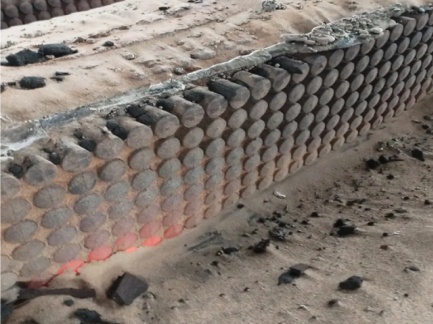
Cylpebs are cylindrical grinding media with slightly rounded ends. Their unique shape creates a larger surface contact area with the material being ground.
Important characteristics include:
Cylindrical shape with flat or rounded ends
Larger surface area compared to spherical balls
Higher grinding contact frequency
Effective fine grinding performance
Cylpebs tend to create more friction and attrition during grinding, which can improve the efficiency of fine particle reduction.
Although both grinding media types serve the same purpose, their geometry results in different grinding behaviors.
Feature |
High Chrome Steel Balls |
Cylpebs |
Shape |
Spherical |
Cylindrical |
Impact Strength |
High |
Medium |
Surface Contact |
Moderate |
Large |
Grinding Mode |
Impact + Rolling |
Impact + Attrition |
Typical Application |
Coarse Grinding |
Fine Grinding |
Steel balls rely more heavily on impact forces to crush materials, while cylpebs emphasize surface contact and attrition grinding.
These structural differences directly influence how each type performs in cement ball mill systems.
Grinding efficiency depends on the interaction between grinding media and clinker particles inside the mill. The shape of the grinding media determines how energy is transferred to the material.
Steel balls create strong impact forces when they fall from the upper part of the mill rotation. This impact breaks larger clinker particles into smaller fragments.
Advantages include:
Effective breaking of coarse particles
Stable operation under high loads
Suitable for the first chamber of cement ball mills
However, spherical balls provide limited contact surface during grinding, which means they may not be as efficient for producing extremely fine particles.
Cylpebs provide more surface contact with materials. As they tumble and slide inside the mill, they generate both impact and friction forces.
Advantages include:
Higher grinding contact frequency
More efficient fine grinding
Improved particle size distribution
For this reason, cylpebs are often used in the second chamber of cement mills where finer grinding is required.
Durability is a major factor when selecting High Abrasion Resistance Grinding Media. Cement mills operate continuously under high impact and abrasive conditions.
High chrome steel balls are known for their exceptional wear resistance. The high chromium content forms hard carbides within the alloy structure.
Benefits include:
Low wear rate
High hardness
Long operational lifespan
Reduced media consumption
Because of these characteristics, steel balls can maintain consistent grinding performance over long production cycles.
Cylpebs also offer strong wear resistance, but their edges may experience higher wear under heavy impact conditions.
However, when operating under controlled mill conditions and using high-quality alloy materials, cylpebs can still achieve excellent durability.
The actual wear performance depends heavily on manufacturing quality and alloy composition.
The overall efficiency of cement ball mills is influenced by several variables, including mill design, feed size, and grinding media distribution.
Below is a simplified comparison of grinding efficiency between steel balls and cylpebs.
Grinding Factor |
Steel Balls |
Cylpebs |
Coarse Crushing |
Excellent |
Moderate |
Fine Grinding |
Good |
Excellent |
Energy Efficiency |
Stable |
Often Higher |
Particle Distribution |
Moderate |
More Uniform |
Steel balls perform best in the initial crushing stage, while cylpebs excel in refining particle size during the final grinding stage.
This is why many cement plants use a combination of both types of grinding media.
Instead of choosing only one type of grinding media, many modern cement mills optimize efficiency by using a mixed distribution strategy.
Typical mill configuration includes:
First chamber
Larger high chrome steel balls
Designed for coarse clinker crushing
Second chamber
Smaller balls or cylpebs
Designed for fine grinding and particle refinement
This distribution improves overall grinding efficiency while minimizing energy consumption.
The correct ratio between steel balls and cylpebs depends on several factors including mill diameter, rotational speed, and clinker hardness.
When selecting High Abrasion Resistance Grinding Media, cement plant operators should evaluate several technical factors.
Harder clinker materials require stronger impact forces, which often favors steel balls.
If the target product requires extremely fine particles, cylpebs may provide better grinding efficiency.
Two-chamber mills benefit from a combination of grinding media shapes to balance impact and attrition grinding.
High-quality alloy grinding media significantly reduce wear and replacement frequency, lowering operating costs.
Grinding media performance has a direct impact on cement production efficiency.
Benefits of using high-quality grinding media include:
Improved mill productivity
Reduced energy consumption
More stable cement fineness
Lower maintenance costs
Longer grinding media lifespan
Selecting reliable grinding media manufacturers ensures consistent alloy composition and manufacturing quality.
From our experience in supplying High Abrasion Resistance Grinding Media to cement plants, we have observed that the best grinding results usually come from carefully optimized media combinations rather than relying solely on one shape.
High chrome steel balls provide strong crushing ability for coarse clinker particles, while cylpebs enhance grinding efficiency during the fine grinding stage.
Producing high-quality grinding media requires precise alloy composition control, advanced casting processes, and strict quality inspection. These factors ensure the media maintains hardness, impact resistance, and durability under demanding mill conditions.
At Anhui Ningguo Zhongrui Wear-resisting material Co., Ltd., we specialize in manufacturing high chrome grinding media designed for cement mills and other heavy grinding industries. Our production process focuses on improving wear resistance and maintaining stable mechanical performance in high-impact environments.
With years of experience supplying grinding media for cement plants, we continue to refine our materials and manufacturing processes to support efficient and reliable mill operation.
Choosing the right grinding media plays a critical role in improving cement ball mill efficiency. High chrome steel balls deliver strong impact forces that are ideal for breaking coarse clinker particles, while cylpebs provide greater surface contact and improved fine grinding performance. In many cement plants, combining both types of High Abrasion Resistance Grinding Media produces the most balanced and efficient grinding results.
By selecting high-quality grinding media manufactured with optimized alloy compositions and strict quality control, cement producers can reduce wear rates, improve energy efficiency, and achieve more consistent grinding performance. A well-designed grinding media strategy helps transform an ordinary cement mill into a highly efficient production system supported by durable wear-resistant grinding media.
For cement producers seeking reliable grinding solutions, learning more about the products and expertise offered by Anhui Ningguo Zhongrui Wear-resisting material Co., Ltd. can provide valuable insights into improving mill performance and long-term operational stability.
High Abrasion Resistance Grinding Media refers to alloy grinding materials designed to withstand heavy impact and abrasive conditions inside grinding mills, commonly used in cement production.
Steel balls are better for coarse grinding due to strong impact force, while cylpebs perform better for fine grinding because of increased surface contact.
High chrome steel balls offer excellent wear resistance, high hardness, and long service life, making them suitable for continuous grinding operations.
Yes. Many cement plants combine both types of grinding media to improve grinding efficiency and achieve better particle size distribution.


