

Views: 0 Author: Site Editor Publish Time: 2025-09-29 Origin: Site


In mining, efficient mineral processing is key to maximizing yield and reducing operational costs. Grinding balls play a critical role in SAG and ball mill performance, directly impacting milling efficiency, equipment lifespan, and productivity. Grinding steel balls, made from high-quality steel alloys, combine hardness, toughness, and wear resistance, making them ideal for breaking down hard ores. In SAG mills, they work with larger ore chunks for effective coarse grinding, while in ball mills, they achieve finer, uniform powders suitable for further processing.
High hardness steel balls further enhance efficiency by offering superior wear resistance, maintaining shape and size longer, reducing media replacement frequency, and improving energy utilization. Selecting the right material, size, and hardness ensures optimal grinding performance, increased throughput, and lower maintenance costs, making high hardness grinding media a strategic choice for modern mining operations.
In modern mining and mineral processing operations, selecting the right grinding ball is essential for achieving efficient grinding performance. Grinding Steel Balls are one of the most common forms of grinding media used in SAG mills, ball mills, and other milling equipment. These balls are typically made from high-quality steel alloys that provide a combination of hardness, toughness, and wear resistance. Depending on the production requirements, grinding steel balls are available in various hardness grades, usually ranging from 55 HRC to 65 HRC, allowing operators to tailor the media to specific ore types and mill conditions.
High Hardness Media refers to grinding balls or other milling media manufactured to provide superior wear resistance and mechanical strength. Unlike standard steel balls, high hardness media maintain their shape and size for longer periods under the extreme conditions inside mills. This durability ensures consistent grinding performance, reduces media consumption, and minimizes the frequency of mill shutdowns for media replacement. As a result, using high hardness media can significantly improve both throughput and energy efficiency in mining operations.
Grinding media comes in different forms, each suited for specific applications:
Mill Balls: Traditional spherical steel balls widely used in both SAG mills and ball mills. They provide uniform grinding and are ideal for a wide range of ore types.
Cylpebs: Cylindrical grinding media designed to offer a higher contact area with the material being ground. They are particularly effective in autogenous and semi-autogenous milling, improving grinding efficiency and reducing energy consumption.
Casting and Forging Balls: Produced through casting or forging processes, these balls provide varying hardness and toughness characteristics. Casting balls are generally more cost-effective and suitable for softer ores, while forging balls offer superior mechanical strength for harder ores.
Choosing the right form and hardness of grinding media depends on the ore type, mill size, and operational goals. By understanding the differences between mill balls, cylpebs, and high hardness media, mining operators can optimize grinding performance, reduce wear costs, and enhance overall efficiency in mineral processing plants.
SAG mills (Semi-Autogenous Grinding mills) are widely used in mining operations to handle coarse ore grinding. In these mills, grinding balls act as the primary grinding media, supplementing the ore itself in breaking down large rocks. High-quality Grinding Steel Balls or High Hardness Media are essential in SAG mills to withstand the impact and abrasion from large ore particles.
Using high hardness grinding balls in SAG mills improves grinding efficiency, reduces the wear rate of the balls, and prolongs mill life. This is particularly critical in gold, copper, and iron mining, where ore hardness varies and consistent grinding is necessary to achieve the desired particle size for subsequent processing.
Ball mills are primarily used for fine grinding and secondary or tertiary milling after coarse crushing. They rely heavily on grinding balls as the main media to crush and grind ore into fine powders. The choice of Grinding Steel Ball or high chromium steel ball affects both the grinding efficiency and energy consumption of the mill.
High Chromium Steel Balls: Offer excellent wear resistance and are ideal for hard ores, minimizing media consumption.
Casting vs. Forging Balls: Forging balls have superior toughness and are suitable for abrasive ores, while casting balls are cost-effective for less abrasive materials.
Ball mills can also use cylpebs, which improve the contact area with the material, enhancing grinding efficiency and uniformity. This versatility allows operators to optimize mill performance for different ore types and production goals.
Different types of mines have unique grinding requirements:
Gold Mines: Require SAG and ball mill grinding with high hardness steel balls to achieve fine particle size for efficient cyanidation.
Copper Mines: Benefit from high wear resistance grinding media, reducing downtime in large SAG and ball mills.
Iron Mines: Often use mill balls and cylpebs for coarse grinding, ensuring uniform particle size for pelletizing or sintering processes.
Bauxite and Aluminum Ore Mines: Use high hardness grinding balls to handle medium hardness ores while maintaining energy efficiency.
By selecting the appropriate grinding ball type, material, and hardness, mining operations can enhance throughput, reduce energy consumption, and optimize overall processing efficiency.
Grinding efficiency directly affects mill throughput, energy consumption, and operational costs. Using durable, high hardness grinding media reduces the frequency of media replacement, minimizes downtime, and maintains a consistent particle size distribution. Efficient grinding also lowers power consumption per ton of ore, a critical factor in large-scale mining operations where energy costs constitute a significant portion of operational expenses.
Ultimately, proper selection and maintenance of grinding steel balls, high hardness media, and cylpebs allow mining companies to maximize production, maintain mill longevity, and achieve sustainable operational efficiency.
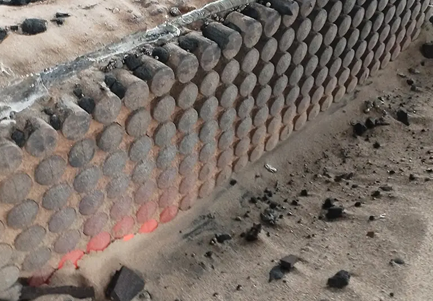
The performance of grinding balls is a critical factor in determining the efficiency, energy consumption, and operational costs of SAG and ball mills. Selecting the right grinding media and understanding key performance factors ensures optimal grinding, consistent ore particle size, and prolonged equipment life.
One of the most important characteristics of a grinding ball is its hardness and wear resistance. These properties directly impact mill efficiency and the longevity of both the grinding media and the mill itself.
High hardness steel balls are engineered to withstand repeated impact and abrasive forces encountered during mining and industrial milling operations. The benefits of using high hardness grinding media include:
Longer Service Life: High hardness balls are more resistant to wear and deformation. This reduces the frequency of media replacement, minimizing mill downtime and maintenance costs.
Consistent Grinding Performance: Durable grinding balls maintain their shape and size over extended periods, ensuring uniform particle size distribution in the milled ore. Consistency in grinding improves downstream processing efficiency and overall recovery rates.
Lower Energy Consumption: By retaining their hardness and shape, steel balls optimize the transfer of energy to the ore particles, reducing the energy required per ton of ore processed. This not only improves operational efficiency but also contributes to cost savings and environmental sustainability.
In summary, the hardness and wear resistance of grinding balls play a pivotal role in maintaining high-performance milling operations, particularly in demanding applications such as gold, copper, and iron ore processing.
Another critical factor influencing mill performance is the size of the grinding balls and the charge ratio—the proportion of balls in the mill relative to the volume of ore. Correctly selecting and loading grinding media ensures efficient ore breakage and optimal energy transfer.
Larger Balls: Larger diameter balls are ideal for coarse grinding in SAG mills, where they can effectively crush big ore chunks. Their increased mass helps generate higher impact forces, which are essential for breaking down tough ores.
Smaller Balls: Smaller diameter balls are better suited for fine grinding in ball mills. They provide more contact points with the ore, producing a finer particle size necessary for subsequent processing stages.
Mixed Sizes: In many milling operations, a combination of large and small balls is the most effective approach. Mixed-size grinding media accommodate ores of varying hardness, ensuring that both coarse and fine particles are efficiently ground.
Optimizing the ball load and distribution within the mill is equally important. A properly calculated charge ratio maximizes the ore-to-media contact, enhances grinding efficiency, and prevents energy loss due to underloaded or overloaded mill conditions.
Investing in high hardness steel balls offers multiple operational benefits beyond durability and wear resistance:
Reducing Media Replacement Frequency: The superior hardness and toughness of these balls mean they last longer, reducing the need for frequent replacements and minimizing mill downtime.
Minimizing Wear on Mill Liners: High-quality steel balls reduce abrasive wear on mill liners, extending liner life and lowering maintenance costs.
Ensuring Consistent Grinding: Stable grinding media maintain their shape and size over extended periods, which results in more uniform ore particle sizes and improved downstream processing.
Reducing Energy Consumption: High hardness balls transfer energy more efficiently to the ore, decreasing the amount of energy required for grinding and contributing to overall energy savings.
By carefully considering hardness, wear resistance, ball size, and charge ratio, mining operations can significantly enhance SAG and ball mill performance. Selecting high hardness steel balls not only improves productivity but also lowers operational costs, making them a strategic choice for both industrial and mining milling applications.
Grinding steel balls and high hardness media are essential for maximizing SAG and ball mill efficiency in mining and industrial operations. Their material composition, hardness, wear resistance, and size directly influence grinding performance, energy consumption, and operational costs. High-quality grinding balls and cylpebs ensure consistent ore size reduction, reduce wear on mill liners, lower maintenance costs, and improve energy efficiency. Properly selected media also support uniform particle size, enhancing downstream processing in mineral recovery, cement, and other industrial applications. Investing in superior grinding media is not just a technical choice—it’s a strategic decision for sustainable productivity and long-term operational success. For those seeking reliable, high-performance grinding balls and related wear-resistant materials, Anhui Ningguo Zhongrui Wear-resisting Material Co., Ltd. offers expert solutions and tailored recommendations to optimize mill performance and reduce operational costs. Contact them today to explore the best options for your milling needs.


