

Views: 0 Author: Site Editor Publish Time: 2026-03-05 Origin: Site


In cement grinding, media selection affects more than just wear life. It influences mill stability, media consumption, grinding efficiency, product consistency, liner interaction, and day-to-day operating cost. In a cement ball mill, the grinding environment is continuous, abrasive, and highly sensitive to changes in media shape, hardness, and wear pattern. That is why many plants pay close attention to High Abrasion Resistance Grinding Media when choosing what goes into the mill. A lower-cost media may look acceptable at purchase, but if it wears too fast, changes shape too quickly, or creates unstable grinding conditions, the apparent savings can disappear in actual production. Industry references consistently note that good grinding media should combine high wear resistance with adequate impact resistance to extend service life and help reduce grinding-related cost.
From our perspective as a wear-resistant materials manufacturer, the reason many cement producers choose high chrome steel ball and cylpebs is practical: they want a more stable grinding body, lower media loss, and a media shape that matches different grinding stages inside the mill. High-chrome media is widely associated with strong abrasion resistance because chromium-rich alloy structures are designed to resist surface wear in demanding milling conditions. At the same time, cylpebs are often discussed for their larger surface contact area and higher bulk density compared with balls of similar material, which can be useful in fine grinding conditions.
High Abrasion Resistance Grinding Media refers to grinding bodies designed to resist material loss during repeated impact and abrasive contact inside the mill. In cement grinding, this matters because the media is exposed to:
continuous impact against clinker and other grinding materials
repeated contact with liners and other media
abrasive wear from hard particles
long operating cycles with constant motion
A media with stronger abrasion resistance generally maintains its size and shape longer, which helps the mill work under more stable conditions over time. High-chrome grinding media is commonly described in industry sources as having strong wear resistance due to its chromium-rich alloy structure and hard, abrasion-resistant surface.
In practical terms, this means the media can remain closer to its intended working profile for a longer period rather than wearing down too quickly.
A cement mill needs grinding media that can handle hard, abrasive feed while staying reliable over many cycles. This is one reason high chrome steel balls are so widely used.
strong wear resistance
good shape retention over time
lower media consumption in abrasive service
more stable grinding conditions across operating cycles
reduced frequency of media replenishment
Public industry references consistently describe high-chrome grinding balls as being valued for wear resistance and longer service life in demanding milling processes. Some commercial sources describe typical high-chrome ranges in the roughly 10–30% chromium range, while product listings for cement applications commonly describe high hardness ranges around HRC 57–65 or above, depending on grade and formulation.
When media wears too quickly, it can:
change the effective media grading too fast
increase media addition frequency
create less predictable impact and grinding behavior
raise total media cost over time
A more wear-resistant media helps reduce these fluctuations.
In a ball mill, the alloy matters—but so does the shape of the grinding media. The reason plants compare balls and cylpebs is that the two shapes do not behave exactly the same inside the mill.
Research and industry sources note that media shape can affect tumbling mill performance, and that cylpebs can offer higher surface area and higher bulk density than balls of similar material because of lower voidage. These characteristics are often discussed in relation to grinding efficiency and particle size behavior.
Media Type | Typical Characteristic | Common Grinding Role |
High chrome steel ball | stronger point impact, classic spherical motion | coarse to general grinding |
High chrome cylpebs | higher surface contact, denser packing tendency | fine grinding support |
This does not mean one shape is always “better.” It means the shape should match the grinding duty.
High chrome steel balls remain one of the most common choices in cement mills because they are versatile and work well across many grinding conditions.
1. Stable impact behavior
The spherical shape supports predictable cascading and cataracting motion in the mill, which is important for breaking clinker particles efficiently.
2. Broad application suitability
Balls are widely used in first-chamber or mixed-chamber grinding because they can handle general crushing and grinding duties effectively.
3. Easier grading management
Ball sizes are commonly selected in stepped grading systems, making it easier for operators to build a media charge suited to feed size and mill chamber design.
4. Good long-term shape retention when alloy quality is stable
When made from suitable high-chrome alloy, balls can keep their working form longer under abrasive service, which supports more stable milling conditions. High-chrome balls are widely described as offering extended wear life compared with lower-grade alternatives.
For many cement producers, this makes high chrome balls the “base” media choice for dependable mill operation.
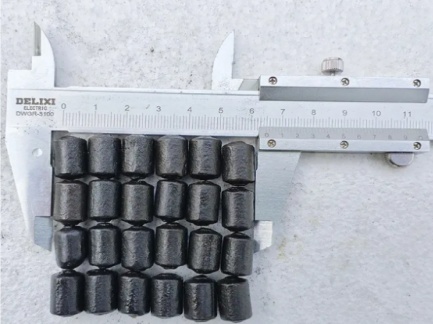
High chrome cylpebs are often selected when plants want a media shape that offers more contact area and a somewhat different grinding action than spherical balls.
1. Higher surface contact area
Cylpebs are commonly described as having greater surface area than balls of similar material, which can support finer grinding interaction.
2. Higher bulk density in the charge
Because cylpebs have less static voidage than balls, more grinding body mass can occupy the same volume in some charge conditions.
3. Useful in fine grinding zones
In practical mill operation, this can make cylpebs attractive for later grinding stages where more surface contact and fine-size reduction are important.
4. Support for product fineness control
Some industry references describe cylpebs as helping create more uniform particle size behavior in fine grinding applications.
This is why many plants consider cylpebs for second-chamber or fine-grinding sections, depending on mill design and operating target.
In many real cement grinding systems, the most practical answer is not “balls only” or “cylpebs only,” but a suitable combination based on chamber duty.
Balls are often used where stronger impact breakage is needed.
Cylpebs may be more suitable where finer grinding and increased surface contact become more important.
This logic matches common industry discussion that balls are broadly favored for general ball mills, while cylpebs can offer advantages in certain fine-grinding conditions because of their shape-related contact characteristics.
Mill Zone | Common Media Preference | Why |
First chamber | larger high chrome balls | stronger impact on coarser feed |
Later chamber | smaller balls or high chrome cylpebs | better finishing and finer grinding control |
The exact choice depends on feed hardness, separator target, chamber design, and desired product fineness.
Choosing High Abrasion Resistance Grinding Media for cement ball mills is really about choosing stability. High chrome steel balls are widely used because they offer dependable wear resistance, predictable impact behavior, and broad suitability for general grinding duties. High chrome cylpebs are often valued because their shape provides higher surface contact and can support fine-grinding conditions in the right part of the mill. Used correctly, these two media forms help plants balance wear life, grinding efficiency, and day-to-day operating consistency. Instead of focusing only on initial purchase cost, many cement producers choose high-chrome balls and cylpebs because they are practical tools for managing long-term grinding performance under abrasive mill conditions.
At Anhui Ningguo Zhongrui Wear-resisting material Co., Ltd., we understand that cement grinding media must perform in real mill conditions, not just in specifications. If you are evaluating high chrome steel ball and cylpebs for cement ball mill grinding and want a more practical match between wear resistance, media shape, and production goals, you are welcome to learn more from Anhui Ningguo Zhongrui Wear-resisting material Co., Ltd.
Because high-chrome media is widely valued for strong wear resistance, which helps maintain media shape longer and reduce replacement frequency in abrasive grinding conditions.
High chrome steel balls are spherical and are commonly used for general impact grinding, while cylpebs have a cylindrical shape with greater surface area and higher bulk density than balls of similar material.
They are often considered useful in fine-grinding conditions because their shape provides more surface contact, which can support finishing duties in suitable mill zones.
Because balls and cylpebs serve different grinding roles: balls are often used for stronger impact breakage, while cylpebs may be chosen where finer grinding and more surface contact are desired.


