

Views: 0 Author: Site Editor Publish Time: 2025-10-01 Origin: Site


Grinding balls are essential in the efficient processing of copper, iron, and gold ores. They play a critical role in SAG (Semi-Autogenous Grinding) and ball mill operations, reducing ore size for downstream processing and maximizing mineral recovery. The choice of grinding balls directly affects milling efficiency, throughput, and operational performance, making them a key consideration for mining operators.
Using high-quality grinding media enhances mill performance by maintaining consistent size reduction, ensuring uniform particle distribution, and minimizing energy consumption. This not only improves ore recovery but also reduces wear on mill liners and lowers maintenance costs, contributing to more sustainable and cost-effective mining operations.
Grinding balls are primarily produced via two methods: casting and forging. Casting involves pouring molten steel into molds, producing balls with uniform size and good hardness, suitable for general milling. Forging compresses heated steel billets under high pressure, creating balls with superior toughness, wear resistance, and longer service life. Understanding these differences helps operators choose the right media for specific ore types and mill conditions.
Understanding grinding ball types is essential for optimizing mill performance. The main types used in copper, iron, and gold ore processing are casting and forging grinding balls, each with distinct manufacturing processes, material properties, and performance characteristics.
Casting grinding balls are made by pouring molten steel into molds to form uniform spheres. Typically produced from high-chromium or alloy steel, they offer a balance of hardness and wear resistance.
Advantages and Applications:
Consistent Hardness: Ensures stable grinding performance.
Cost-Effective: Lower production costs make them economical for large-scale operations.
Versatile Use: Suitable for various ores and adaptable to both SAG and ball mills.
Casting balls are ideal when moderate wear resistance is sufficient and budget constraints exist.
Forging grinding balls are manufactured by compressing heated steel billets under high pressure, refining the internal grain structure. This results in higher toughness and superior wear resistance.
Advantages and Applications:
High Toughness: Less prone to cracking, extending service life.
Enhanced Wear Resistance: Maintains size and grinding efficiency longer.
Optimized Performance: Ideal for hard ores or mills operating under extreme conditions, such as copper and gold SAG mills.
Forged balls are preferred when minimizing downtime and maintenance costs is crucial.
Feature | Casting Balls | Forging Balls |
Manufacturing | Molten steel poured into molds | Steel billets compressed under high pressure |
Hardness | Good, uniform | High, slightly variable but tougher |
Toughness | Moderate | High |
Wear Resistance | Moderate | Excellent |
Cost | Lower | Higher |
Typical Applications | General SAG/ball mills | Heavy-duty milling in hard ore applications |
The choice between casting and forging depends on ore hardness, mill type, operational goals, and budget. Casting balls suit general milling needs, while forged balls offer superior durability, reducing media replacement frequency and minimizing maintenance costs.
By selecting the right grinding balls for copper, iron, and gold ore processing, mining operations can achieve optimal mill efficiency, longer equipment life, and improved cost-effectiveness.
Selecting the right grinding ball material is crucial for maximizing efficiency and minimizing operational costs in copper, iron, and gold ore processing. Different ore types have distinct hardness, abrasiveness, and milling characteristics, which dictate the ideal properties of grinding media.
Copper ores are often medium to hard in nature, requiring grinding media that can withstand both impact and abrasion. High-chromium casting balls or forged steel balls with medium to high hardness are commonly used.
Key considerations:
Hardness: Adequate to crush hard copper sulfide or oxide ores without excessive wear.
Durability: High toughness ensures longer service life in SAG and ball mills.
Energy Efficiency: Properly selected balls reduce power consumption per ton of ore processed.
Using suitable grinding balls improves throughput and ensures consistent particle size for downstream flotation or leaching processes, directly enhancing copper recovery rates.
Iron ore is generally abrasive, placing significant wear demands on grinding media. Forged high-hardness steel balls are often preferred due to their superior toughness and wear resistance.
Key considerations:
Wear Resistance: Prevents rapid ball degradation and reduces the frequency of media replacement.
Milling Efficiency: Maintains consistent grinding performance, improving mill throughput.
Cost Optimization: Longer-lasting balls reduce operational downtime and maintenance costs.
Optimizing the grinding ball material and size ensures efficient liberation of iron particles, improving pelletizing and sintering processes in downstream operations.
Gold ores, particularly those requiring fine grinding for cyanidation or flotation, demand high hardness and precisely sized grinding balls. Both casting and forging balls can be used depending on ore abrasiveness and mill type.
Key considerations:
Ball Size: Smaller or mixed-size grinding balls enhance fine grinding efficiency, critical for maximizing gold recovery.
Hardness: High hardness reduces wear and maintains consistent particle size.
Energy Consumption: Efficient grinding minimizes power usage and operational costs.
Careful selection of grinding media tailored to gold ore characteristics ensures that mills achieve the desired fineness, improving gold extraction rates and reducing production costs.
The choice of grinding ball material directly affects both energy efficiency and maintenance expenses:
Energy Consumption: High-quality, appropriately hardened balls transfer energy more effectively, reducing the electricity needed per ton of ore.
Operational Costs: Durable grinding media decreases the frequency of replacement and reduces wear on mill liners, minimizing downtime and maintenance labor.
Productivity: Optimized media selection ensures consistent ore reduction, improving overall mill throughput and recovery rates.
By carefully matching grinding ball material, hardness, and size to the specific ore type—whether copper, iron, or gold—mining operations can significantly enhance performance, reduce costs, and ensure long-term operational efficiency.
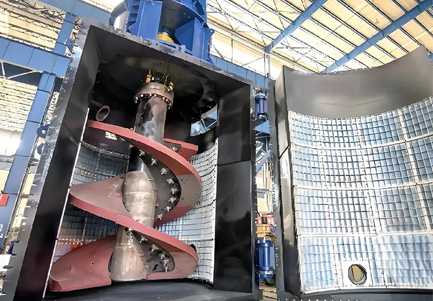
Grinding balls, whether cast or forged, are indispensable components in the mineral processing industry. Their selection and application in SAG and ball mills directly impact grinding efficiency, throughput, and ore recovery in copper, iron, and gold operations.
Semi-Autogenous Grinding (SAG) mills rely on a combination of large ore chunks and grinding balls to reduce ore size efficiently. In SAG mills, casting and forging grinding balls play a critical role in:
Impact and Cascading: High-quality grinding balls generate the necessary impact and cascading motion to break down large ore particles.
Durability: Forged balls with high toughness withstand repeated impacts, reducing breakage and maintaining consistent grinding performance.
Optimized Media Load: Proper selection of ball size and hardness ensures effective energy transfer and minimizes overgrinding or undergrinding.
In copper mining, for example, SAG mills equipped with high-chromium cast balls improve coarse grinding of sulfide ores, enhancing subsequent flotation efficiency. Similarly, in iron ore SAG mills, forged steel balls help maintain throughput while reducing media and liner wear.
Ball mills handle the secondary stage of grinding, transforming partially crushed ore from SAG mills or direct crushing operations into finer particles suitable for downstream processes. High hardness grinding balls are essential for:
Uniform Particle Size: Consistent ball performance ensures fine and homogeneous particle reduction, critical for efficient flotation or leaching.
Reduced Wear: Durable forged or high-chromium cast balls minimize wear, extending the service life of both grinding media and mill liners.
Energy Efficiency: Properly sized and hardened balls improve energy utilization, lowering power consumption per ton of ore processed.
In gold mining, small-diameter high-hardness balls enable precise fine grinding, increasing gold liberation rates and optimizing cyanidation recovery.
Copper Mining: SAG and ball mills using high-chromium cast balls achieve effective coarse and fine grinding of copper sulfide ores, improving flotation efficiency and overall metal recovery.
Iron Mining: Forged steel balls with superior toughness maintain grinding performance in abrasive iron ores, reducing media replacement frequency and lowering operational costs.
Gold Mining: The combination of mixed-size high hardness balls ensures efficient gold ore grinding, enhancing downstream extraction and reducing energy consumption.
Selecting the right casting or forging grinding balls for specific mill types and ore characteristics improves grinding efficiency.
Optimal ball size, hardness, and material composition reduce maintenance, increase throughput, and enhance energy efficiency.
Across copper, iron, and gold mining, high-quality grinding media contribute to higher recovery rates and long-term operational success.
Choosing the right grinding balls—cast or forged—is essential for maximizing milling efficiency, reducing operational costs, and extending equipment lifespan. Cast balls provide consistent hardness and cost-effective performance for general milling, while forged balls deliver superior toughness and wear resistance for challenging ores and demanding mill conditions. Selecting grinding media that matches specific ore types and mill requirements ensures higher throughput, reduced downtime, and improved energy efficiency.
For mining operations processing copper, iron, or gold ores, investing in high-quality grinding balls is a strategic decision that enhances productivity and long-term performance. Anhui Ningguo Zhongrui Wear-Resisting Material Co., Ltd. offers a comprehensive range of durable cast and forged grinding balls designed for optimal SAG and ball mill performance. Contact the company to explore tailored solutions that improve ore processing efficiency and operational sustainability.


